


There is an excessive importance of Allied Health Sciences in patient care as they form the pillar of a well-functioning healthcare system. Moreover, Allied Health Sciences play a significant role in the early detection of diseases through laboratory investigations, imaging, and other diagnostic procedures.
Hadaf College of Allied Health Sciences is dedicated to fostering competent allied health science professionals who can meet the rising demands of the healthcare sector. Moreover, we provide quality education, modern laboratory facilities, and experienced faculty to ensure students get strong theoretical knowledge along with practical clinical training.
This blog talks about Allied Health Sciences and its importance by discussing how it helps patients maintain their overall health. Then, we explore the allied health sciences fields at Hadaf Colleges. Later, we find out the benefits and career options after completing a degree in Allied Health Sciences.
What Are Allied Health Sciences?
Allied Health Sciences is a field of study that emphasises the accurate diagnosis, prevention, and treatment of illnesses. This field produces allied health sciences professionals who support doctors and nurses by offering particular diagnostic, therapeutic, and rehabilitative services. They are important for effective treatment and speedy recovery of patients.
Moreover, these health science professionals apply management skills, administration skills, scientific principles, and evidence-based practices to support health care systems. The allied health field is very big and includes many fields that form a strong backbone for healthcare.
Some allied health care fields are Physiotherapy, Medical Imaging Technology, Medical Laboratory Technology, Surgical Technology, Dental Technology, Radiology, Occupational Therapy, Cardiology, Operation Theatre Technology, Anesthesia, Audiology, Optometry and Orthoptics, and Pathology.
Furthermore, allied health professionals also ensure steadiness of care by monitoring patient progress, encouraging preventive healthcare practices, and educating patients and families. This helps in lowering hospital stays, complications, and patient dissatisfaction, resulting in delivering safe, efficient, and patient-centred healthcare services.
Also, allied health personnel are important for rapid response and life-saving interventions in emergency and critical care settings. Thus, this field is indispensable in-patient care and bridges the gap between diagnosis and recovery, promoting holistic care.
Allied Health Sciences at Hadaf Colleges
Hadaf College prepares its students to contribute well to diagnosis, treatment, rehabilitation, and preventive healthcare services. We emphasis ethical practice, technical excellence, and patient-centred care. This ultimately improves patient outcomes and overall public health.
Hadaf Colleges of Allied Health Science help students learn early detection of diseases through laboratory investigations, imaging, and other diagnostic procedures. They get valuable lessons to make informed decisions and initiate appropriate treatment plans, pain management, and improvement of quality of life.
We offer purpose-built campuses along with modern facilities and skilled faculty all over Khyber Pakhtunkhwa to produce skilled health science professionals. To understand the importance of Allied Health Sciences, Hadaf Colleges offer many BS programmes affiliated with Khyber Medical University (KMU). The BS Allied Health programmes include:
Students benefit from diverse activities to uncover their potential through these comprehensive BS Allied Health Sciences programmes. At Hadaf Colleges, students get exposure to a variety of cultures, making them mature and active citizens ready to encounter societal challenges.
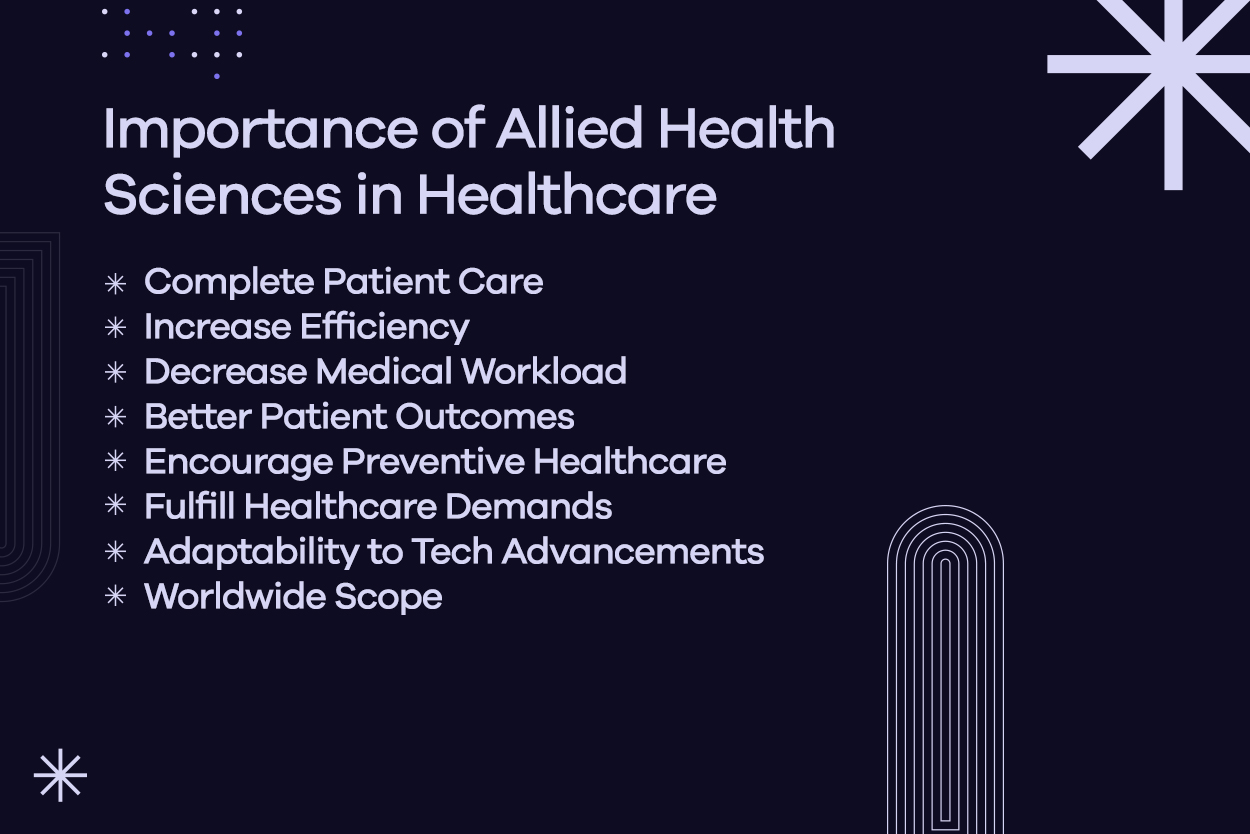
Importance of Allied Health Sciences in Healthcare
The massive change in healthcare is evident. The importance of Allied Health Sciences has grown with technology transforming diagnosis, treatment, and hospital management. The employment of allied health professionals is expected to raise 13% from 2021 to 2031, stated by the U.S. Bureau of Labor Statistics.
This allied health field prepares professionals who are important in the broader healthcare sector. Thus, making this field a cornerstone of modern healthcare. Here are some important reasons why these field matters:
Complete Patient Care
Allied Health Sciences ensures a holistic approach to patient care by concentrating on prevention, diagnosis, treatment, and rehabilitation. That is why allied health sciences is the greatest support to healthcare systems.
Allied Health professionals accompany physicians and nurses to discuss all parts of a patient’s health journey. For example, physical therapists help patients regain mobility and dietitians provide nutrition guidance to patients.
Increasing Efficiency and Decreasing Workload
Professionals in allied health help decrease the burden on doctors and nurses by taking on specific roles and responsibilities. For example, clinical lab scientists handle only diagnostic testing, thus allowing the MBBS physicians to emphasises on treatment planning. This division of tasks increases overall efficiency in healthcare delivery.
Better Patient Outcomes
Specialised skills in the Allied Health Sciences field lead to better clinical outcomes. Allied health professionals equipped with specific field skills straightaway contribute to patient recovery and well-being. They also contribute to the emotional support of patients.
For example, a respiratory therapist assists with chronic breathing issues, and a radiologic technologist provides precise imaging for accurate diagnoses.
Encouraging Preventive Healthcare
The importance of allied health sciences is shown in its critical role in preventing illnesses and handling chronic conditions. For instance, occupational therapists, speech-language pathologists, and nutritionists teach patients and use strategies to decrease long-term health risks, lowering hospital readmissions.
Fulfilling Growing Healthcare Demands
The demand for allied health services are boosting with an aging population and rising chronic diseases. The professionals in this field fulfill the gap between the needs of patients and available healthcare resources. This certifies timely and quality care for a growing number of patients.
Adaptability to Technological Advancements
The professionals in the Allied health field are highly skilled in operating cutting-edge healthcare technologies. The technologies include advanced imaging tools, laboratory diagnostics, and telehealth systems. Their adaptability with technology ensures innovation in the organisation and remains at the forefront of modern healthcare.
Worldwide Scope
Many factors are responsible for the growing number of Allied health professionals in the healthcare system in Pakistan. Also, Allied Health Sciences make up about 30% of the worldwide health workforce, contributing an enormous and fast-expanding scope globally.
Benefits of Allied Health Sciences
The importance of Allied Health Sciences is also shown by the numerous benefits of this field, which are as follows:
- High Demand
- Job Security
- Variety of Roles
- Personal Fulfilment
- Competitive Salaries
- Doorway to Higher Education
- Connect Science and Care
- Healthcare System Support
- Modern Technology and Innovation
- Improved Outcomes
- Emotional Connection
- Preventive Health
Career Options
The importance of Allied Health Sciences is shown from the wide career options after completing the degree in the relevant fields, which are as follows:
- Anesthesia technologist
- Operation theatre assistant
- Critical care assistant
- Radiology technologist
- Diagnostic imaging assistant
- Cardiac Technologist
- Cardiovascular Sonographer
- Cardiac Rehabilitation Specialists
- Medical Equipment Sales Representative
- Surgical technologist
- Operation theatre assistant/manager
- Emergency and trauma support staff
- Health technologist
- Research assistant
- Data analyst
- Public health and infection control assistant
- Hospital administration staff
Become a Successful Allied Health Professional
The importance of Allied Health Sciences is growing every day as healthcare systems worldwide require skilled and trained professionals. That is why Allied Health Sciences is the right choice to build a strong and respected career, other than MBBS or BDS in healthcare.
Hadaf College of Allied Health Sciences offers various BS Programmes that help you gain practical skills and become part of a profession that truly makes a difference.
Final Thoughts
The importance of Allied Health Sciences is reflected in the meaningful careers it offers, helping professionals earn respect and career stability. The field also offers an extensive worldwide scope with opportunities both locally and internationally. The professionals play an integral role in supporting doctors, saving lives, and improving patient care. Students at Hadaf Colleges can learn contemporary skills, get practical training, and prepare for a most respected profession.
FAQs
What are Allied Health Sciences?
It is the healthcare field that supports doctors and nurses through diagnosis, treatment, and patient recovery.
Who are Allied Health Science professionals?
They are trained allied health science professionals who work in labs, diagnostic centers, hospitals, and clinics.
Is Allied Health Sciences a good career choice?
Yes, it offers job stability, respect, and long-term growth both nationally and internationally.
What skills are required for Allied Health Sciences?
Basic scientific knowledge, technical skills, and effective communication are important in this field.
Can I study Allied Health Sciences in Pakistan?
Yes, Hadaf College of Allied Health Sciences offers quality Allied Health programmes.

