


Understanding the skills for Allied Health Professionals is central for students considering a career in allied health sciences. So, this blog is a comprehensive guide for students and for aspiring healthcare professionals.
At Hadaf College of Allied Health Sciences, students can pursue a variety of allied health programmes. These programmes are designed to equip students with the knowledge, technical expertise, and professional skillset required for a successful healthcare career.
You will learn numerous skills for allied health professionals in this blog. But before that, you will understand what allied health science is and why skills for allied health professionals are important. Let’s start exploring!
Allied Health Sciences
Allied Health Science is a field of study that prepares medical professionals who work to diagnose and treat illnesses. Also, it is a wide term that covers healthcare professions supporting physicians, nurses, and other healthcare providers.
The professionals of allied health sciences are called allied health professionals. They assist patients by applying scientific principles and evidence-based practices. They are also responsible for applying management and administration skills to support health care systems.
Allied health professionals, unlike doctors and nurses, focus on specific areas such as diagnostics, therapy, surgical support, and laboratory work. The roles of allied health professionals are essential because they:
- Ensure patient safety
- Accurate diagnostics
- Provide specialized care
- Support the smooth functioning of hospitals and clinics
Through hands-on training in real healthcare settings, Hadaf College of Allied Health Sciences makes the students proficient not only in theoretical knowledge but also in practical skills. Our BS programmes follow a structured curriculum that ensures students meet global healthcare industry requirements.
Five types of BS Allied Health Programmes offered by Hadaf Colleges are fully recognised and are affiliated with Khyber Medical University (KMU) are as follows:
- BS Anesthesia
- BS Radiology
- BS Cardiology
- BS Health
- BS Surgical Technology
Occupations in Allied Health Sciences
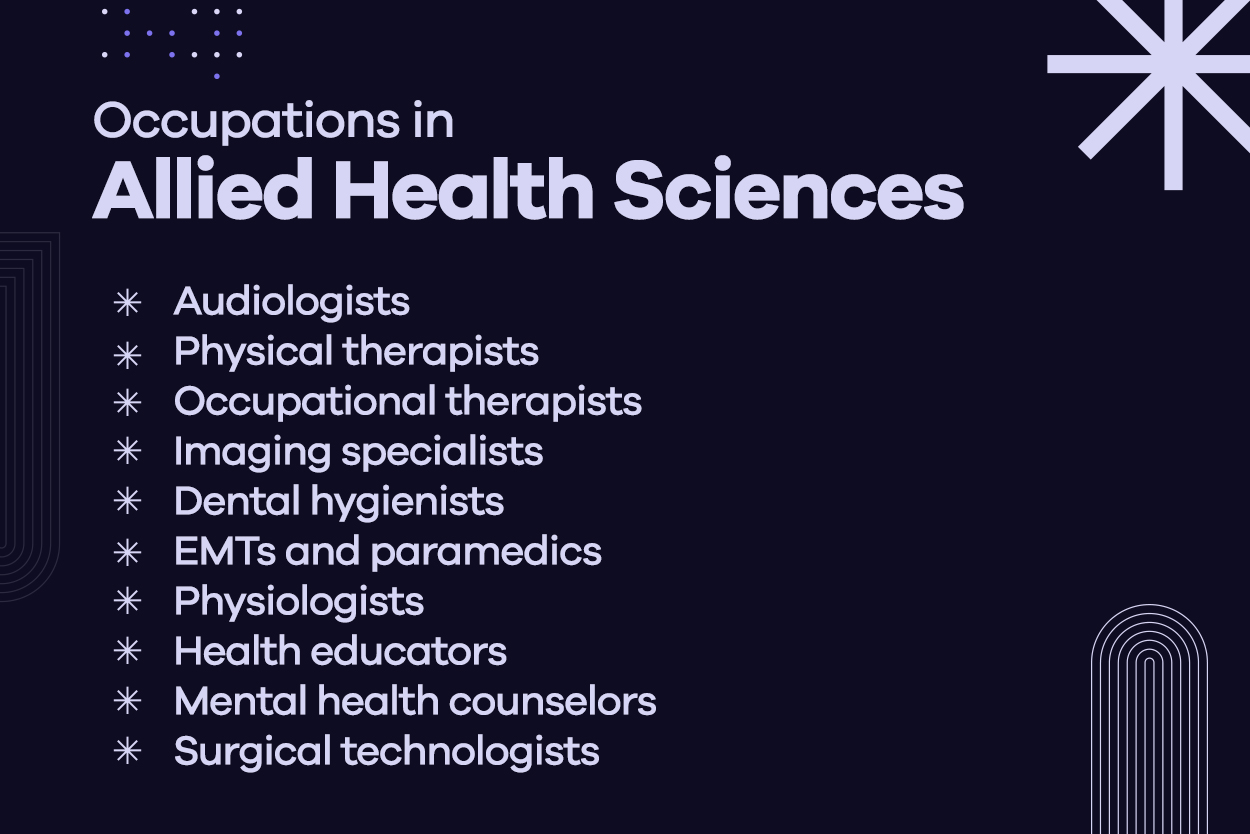
Likewise, there are variety of jobs and occupational roles within the healthcare industry for those with having background in allied health. Some of the job roles include:
- Audiologists
- Physical therapists
- Occupational therapists
- Respiratory therapists
- Imaging specialists
- Dental hygienists and assistants
- EMTs and paramedics
- Athletic trainers
- Physiologists
- Health educators
- Genetic counsellors
- Mental health counsellors
- Surgical technologists
Why are Skills for Allied Health Professionals Crucial?
One of the fastest-growing industries worldwide is the healthcare sector, most importantly, the allied health sciences. Among these essential pillars of the healthcare sector are allied health professionals who play a vibrant role in patient care, diagnostics, therapy, and clinical support. But they need to learn skills to succeed in this field.
The soft skills for allied health professionals help them to demonstrate clinical expertise, making them experienced and indispensable in the healthcare system.
While academic knowledge is significant, a practical skillset often determines how effectively a healthcare professional performs. Here are some of the reasons why skills for allied health professionals are important for their professional and personal grooming.
- Work confidently with patients
- Collaborate efficiently with healthcare teams
- Respond proficiently to emergencies
- Adapt to technological advancements in healthcare
Explore the Top 08 Skills for Allied Health Professionals
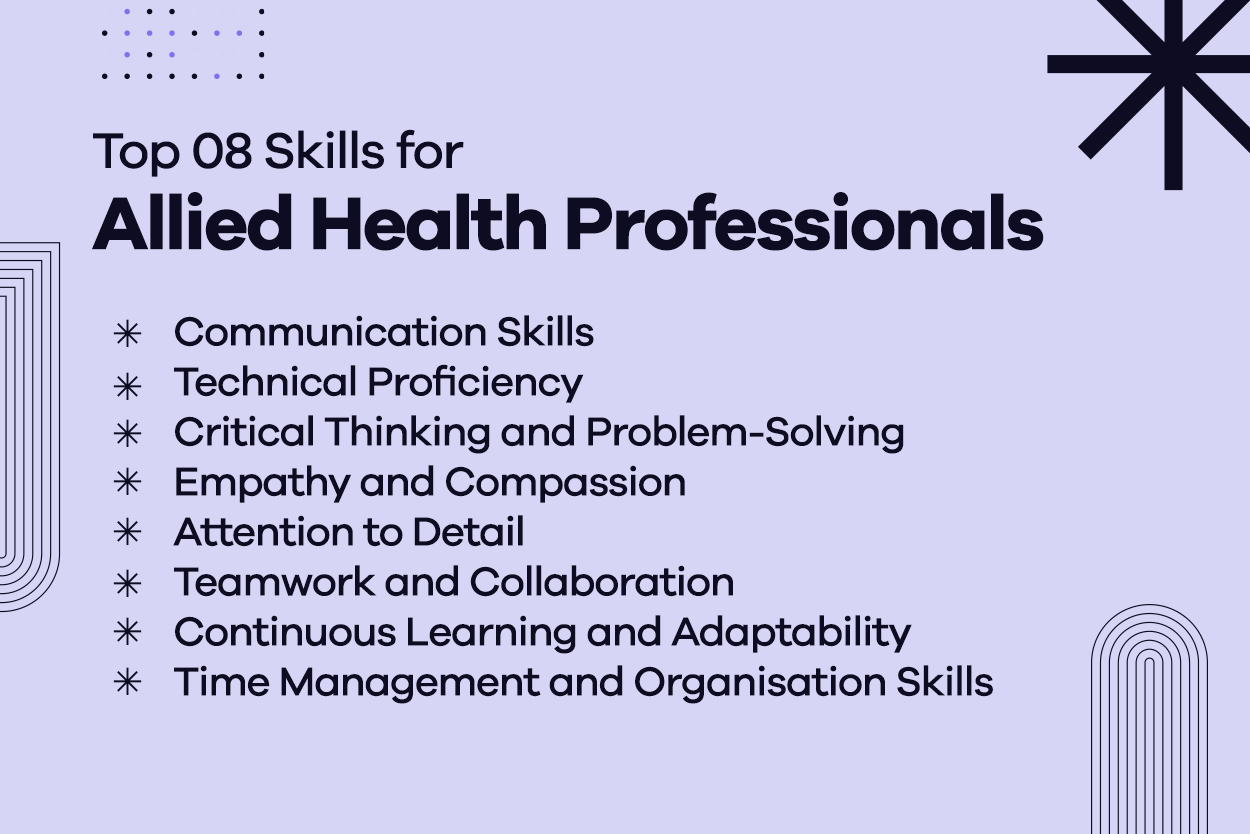
Allied Health professionals must possess a unique combination of technical expertise and interpersonal skills to excel in the allied health field. Below are the most critical personal skills and technical skills to develop:
Communication Skills
Effective communication and active listening of patients, families, and colleagues is fundamental in healthcare. This is so because clear verbal and written communication confirms treatment plans are well-understood, helping foster trust in patients.
Allied health professionals must explain procedures to patients in simple terms, listen attentively to patient concerns, and collaborate with doctors, nurses, and technicians. Hadaf Colleges help students practice communication in hospital scenarios. This allows them to interact with patients and colleagues professionally and empathetically.
Technical Proficiency
Allied health professionals must be proficient in operating medical technologies for accurate diagnostocs and treatment. This is so because having technical proficiency and staying up to date with new tools and devices is indispensable for providing the best care possible. Some of the technical skills for allied health sciences include:
- Operating radiology equipment
- Administering anesthesia safely
- Handling surgical instruments
Hadaf Colleges give chance to students for hands-on labs and clinical rotations at affiliated hospitals. This further provides students with essential technical competencies.
Critical Thinking and Problem-Solving
Healthcare situations often require quick and informed decisions. Critical thinking supports improved care, whether a clinical laboratory technologist is interpreting test results or a dietitian is creating plans to address the dietary needs for specific diseases.
Emergencies and unexpected situations in healthcare require quick decision-making. Critical thinking skills allow professionals to analyse patient symptoms and data, identify potential complications, and recommend safe and quick interventions.
Hadaf College includes case studies and simulation labs in its curricula to enhance problem-solving abilities.
Empathy and Compassion
Most often, patients in healthcare settings face physical and emotional challenges. They often experience fear or discomfort. Allied health professionals working in sensitive fields like mental health services must validate empathy to generate strong patient relationships and improve health outcomes.
Moreover, students at Hadaf Colleges learn empathy that helps to provide emotional support, build trust with patients, and improve overall patient experience.
Attention to Detail
Precision is non-negotiable in healthcare and critical in allied health roles. Attention to detail guarantees high-quality care and minimises risks whether recording patient data, directing treatments, or executing diagnostics.
Hadaf College of Allied Health Sciences requires students to follow protocols meticulously, avoid errors in medication or treatment, and monitor patient essentials exactly. This is so because even slight mistakes can have serious consequences. Thus, making attention to detail a critical skillset for all allied health roles.
Teamwork and Collaboration
Healthcare is at the heart of health systems management and a team-based profession that needs good collaboration and teamwork. Successful allied health professionals must work flawlessly with multidisciplinary teams. They must share information precisely and support team members during high-pressure situations to provide seamless patient care
All the BS Allied health programmes at Hadaf Colleges emphasises team-based clinical projects to build teamwork and collaboration skills among students. Thus, effective teamwork uplifts the whole healthcare system.
Continuous Learning and Adaptability
Medical science and the healthcare industry are evolving rapidly. That’s why allied health professionals need ongoing education and training to stay effective and competitive due to advancements in scientific principles and medical techniques.
For continuous learning, allied health professionals must stay updated with new techniques and technologies, attend workshops and continuing education programmes, and adapt to emerging healthcare trends.
At Hadaf College of Allied Health Sciences, we encourage lifelong learning among students through seminars, research projects, and practical exposure.
Time Management and Organisation Skills
Allied health professionals have multiple responsibilities. Efficient scheduling and task prioritisation help allied health professionals balance clinical responsibilities, documentation, and continuing education.
Time management skills help prioritise critical tasks, meet patient care deadlines, and maintain a smooth workflow in hospitals. Moreover, strong organisational abilities are required to balance multiple patients and administrative responsibilities. This ensures quality care without burnout.
These important skills are being taught to the students of Hadaf College of Allied Health Sciences through structured clinical rotations. It further teaches students to balance responsibilities effectively.
Benefits of Allied Health Sciences
Some benefits of allied health sciences are:
- Doorway to Higher Education
- Better Career Opportunities
- Connect Science and Care
- Healthcare System Support
- Modern Technology and Innovation
- Improved Outcomes
- Emotional Connection
- Preventive Health within the Community
Explore Top Skills for Allied Health Professionals at Hadaf Colleges
Strong skills for allied health professionals are needed to build a strong future in the allied health sciences. Hadaf College of Allied Health Sciences offers top-quality BS Allied Health Programmes to give you the knowledge, skillset, and practical training.
Join Hadaf College of Allied Health Sciences to make yourself ready for a confident and successful healthcare career.
Conclusion
Allied Health Sciences is a rapidly growing field that demands skilled, compassionate, and well-trained professionals. Out of all the healthcare industry requirements, learning skills for allied health professionals is an essential thing. Hadaf College gives you an epic chance to explore different allied health sciences fields. Moreover, at Hadaf Colleges, you learn from expert faculty, train in modern labs, and gain hands-on experience in real clinical environments. You gain the competence and confidence to make a real difference in the healthcare world.
FAQs
Which Allied Health programmes does Hadaf Colleges offer?
Hadaf Colleges offers BS Radiology, BS Cardiology, BS Anesthesia, BS Surgical Technology, and BS Health.
What skills for Allied Health Professionals?
Key skills for allied health professionals include communication, critical thinking, teamwork, technical skills, time management, continuous learning, and empathy.
Is Allied Health a good career in Pakistan?
Yes, it is a growing field with strong demand in hospitals, clinics, labs, and diagnostic centres.
What is the duration of BS Allied Health programmes at Hadaf Colleges?
All programs are 4-year degree programmes with 8 semesters.
Is the BS Allied Health curriculum recognised?
Yes, all the programmes are affiliated with Khyber Medical University (KMU) and follow approved standards.

